Every time a user interacts with an AI application, data moves. It travels from a device to a server, gets processed by a model, and returns as a response. In a single-region setup, that journey is relatively straightforward. But when your AI app serves users across multiple countries, that data journey crosses borders, and borders come with rules.
Data residency refers to the physical or geographic location where data is stored and processed. For developers and creators building multi-region AI apps, getting data residency strategy wrong isn’t just a technical misstep — it can mean regulatory fines, loss of user trust, and even forced shutdowns in certain markets. Understanding and implementing the right strategies from the start is one of the most important architectural decisions you’ll make.
This guide breaks down what data residency actually means in the context of AI applications, why multi-region deployments make it more complex, and what strategies you can put in place to keep your app compliant, performant, and trustworthy — whether you’re a seasoned developer or someone building with a no-code platform like Estha.
Data Residency Strategies in Multi-Region AI Apps
What every builder needs to know about protecting user data, staying compliant, and scaling globally.
5 Key Takeaways
Data Residency Is Foundational
Data residency defines where data physically resides and which jurisdiction’s laws apply. Getting it wrong risks regulatory fines, lost trust, and market shutdowns.
Multi-Region Adds Complexity
Load balancers may route requests across borders silently. Training pipelines that centralize data can violate residency rules. Architecture must be intentional, not accidental.
Design for Compliance Early
Compliance retrofitted late is painful and often inadequate. Treat data residency as an architectural constraint from day one — not a feature to add later.
No-Code Builders Aren’t Exempt
Even on no-code AI platforms, understanding your data flows, reviewing data processing agreements, and being transparent with users are essential responsibilities.
3 Concepts to Know
Key Global Regulations
4 Core Residency Strategies
Architecture Patterns That Support Residency
6 Best Practices to Stay Compliant
Ready to Build Responsible AI Apps?
Estha’s no-code platform handles infrastructure decisions for you — create custom AI chatbots, expert advisors, and virtual assistants in 5–10 minutes, no coding required.
Data Residency Guide for Multi-Region AI Builders
What Is Data Residency and Why Does It Matter for AI Apps?
Data residency is about geography. Specifically, it defines where data physically resides on servers and which jurisdiction’s laws apply to how that data can be stored, accessed, and processed. For a simple blog or e-commerce site, this might be a secondary concern. For an AI application, it becomes central to the product’s legal standing and ethical integrity.
AI apps are data-intensive by nature. They collect user inputs, generate outputs based on trained models, log interactions for improvement, and sometimes store personalization profiles. Each of these data types can fall under different residency requirements depending on where your users are located. A healthcare chatbot serving patients in Germany, for example, faces very different obligations than one serving users in the United States or Singapore.
It’s also worth distinguishing data residency from two related but different concepts. Data sovereignty refers to which government or legal authority has jurisdiction over data, while data localization is the stricter requirement that data must not only reside in a country but also be processed there. Understanding all three concepts helps you build a more complete compliance picture.
The Unique Challenges of Multi-Region AI Deployments
Deploying an AI app across multiple regions isn’t just a matter of spinning up extra servers. It introduces a web of technical, legal, and operational complexity that grows with every new geography you enter. The challenge is that most AI infrastructure is designed for global reach by default, meaning data can flow freely between regions unless you actively configure it otherwise.
One of the most common issues is model inference routing. When a user submits a query to your AI app, load balancers often route that request to the nearest or least-loaded server, which may be in a different country. If that inference involves processing personal data, you may have just created a cross-border transfer without realizing it. This is especially problematic for apps that use third-party AI APIs, where you may have limited visibility into where your data is actually being processed.
Another challenge involves training and fine-tuning pipelines. If your AI app is continuously learning from user interactions, that training data needs to be aggregated somewhere. Centralizing it in one region may violate the residency rules of the regions where that data was collected. Distributing training data across regions, on the other hand, requires careful federated learning architectures that are significantly more complex to implement.
Finally, there’s the operational challenge of keeping up with a fragmented and rapidly evolving regulatory landscape. Countries update their data laws frequently, and what was compliant last year may not be compliant today. Teams building multi-region AI apps need processes not just for initial compliance, but for ongoing monitoring and adaptation.
Key Regulations Shaping Data Residency Decisions
Before choosing a data residency strategy, you need to understand which regulations apply to your users. The regulatory landscape varies significantly by region, and conflating them can create gaps in your compliance posture.
- GDPR (European Union): Restricts the transfer of personal data outside the EU/EEA to countries that don’t meet adequacy standards. Requires explicit consent and strong data minimization practices.
- PDPB / DPDP Act (India): India’s Digital Personal Data Protection Act restricts cross-border transfer of sensitive personal data and gives users broad rights over their information.
- PIPL (China): Among the strictest in the world, China’s Personal Information Protection Law mandates local storage of data for most categories and requires a security assessment before any international data transfer.
- CCPA (California, USA): While less restrictive on residency than GDPR, it grants residents rights over their personal data including the right to know, delete, and opt out of data sales.
- LGPD (Brazil): Brazil’s data protection law closely mirrors GDPR and applies to any organization processing data of Brazilian residents, regardless of where that organization is based.
Each of these frameworks creates different obligations. What they share is a growing expectation that organizations know where their users’ data is, can control it, and can demonstrate that control to regulators. For multi-region AI apps, this means your architecture must be intentional, not accidental.
Core Data Residency Strategies for Multi-Region AI Apps
There’s no one-size-fits-all approach to data residency. The right strategy depends on your user base, the sensitivity of the data you handle, your infrastructure capabilities, and your compliance priorities. That said, several well-established strategies can be adapted to most situations.
1. Regional Data Siloing
This strategy involves creating fully isolated data environments for each region. User data collected in the EU stays on EU servers. Data from users in India stays on Indian servers. The environments don’t share data, and each is governed by the rules of its jurisdiction. This is the most straightforward path to compliance but also the most operationally intensive, since you’re essentially running separate infrastructure stacks for each region.
2. Federated Architecture with Local Processing
Federated approaches allow you to keep raw data local while still enabling global model insights. In a federated learning model, AI training happens on local devices or regional servers, and only aggregated, anonymized model updates are shared centrally. This approach aligns well with privacy-by-design principles and is increasingly supported by major cloud providers. It’s particularly well-suited for healthcare and financial AI applications where data sensitivity is highest.
3. Data Classification and Selective Residency
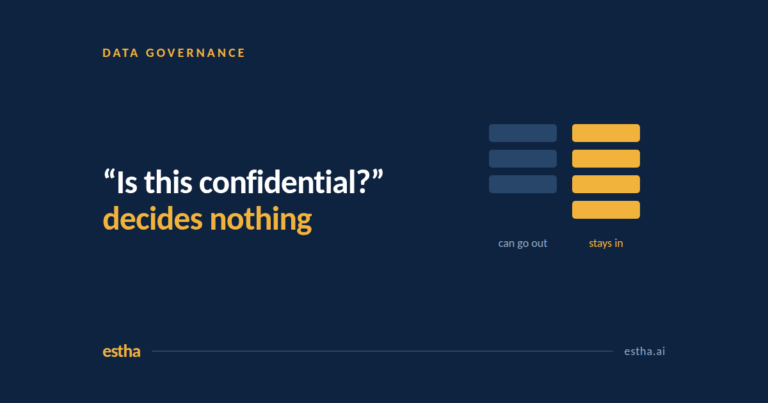
Not all data is equally sensitive. A practical middle-ground strategy involves classifying your data by sensitivity level and applying residency rules only to the categories that require it. Anonymized usage analytics might flow freely across regions, while personally identifiable information (PII) and sensitive user inputs remain locked to their origin region. This reduces infrastructure complexity while maintaining meaningful compliance controls where they matter most.
4. Sovereign Cloud Deployments
Major cloud providers including AWS, Google Cloud, and Microsoft Azure now offer sovereign cloud options designed specifically for regulated industries and markets. These are physically and logically separated environments that guarantee data stays within a specific country or region, with access controls that prevent even the cloud provider’s global staff from accessing the data without local authorization. For AI apps serving highly regulated sectors, sovereign cloud deployments offer the strongest compliance guarantees available.
Architecture Patterns That Support Data Residency
Strategy and architecture need to work together. Choosing a residency strategy without the right underlying architecture will leave gaps. Here are the technical patterns that best support data residency requirements in multi-region AI apps.
- Geo-routing at the DNS or CDN layer: Route incoming requests to regional infrastructure before any data processing occurs, ensuring requests never cross into unauthorized regions.
- Regional API gateways: Deploy separate API gateway instances per region to intercept and process requests locally before deciding whether any cross-region communication is needed (and what data can be shared).
- Data tagging and lineage tracking: Attach metadata to every data record indicating its origin region and sensitivity classification. This powers automated enforcement of residency rules across your pipeline.
- Encryption with regional key management: Store encryption keys in the same region as the data they protect, using region-specific key management services. This ensures that even if data were accessed from another region, it would be unreadable without the appropriate regional keys.
- Audit logging per region: Maintain separate, immutable audit logs in each regional environment to demonstrate compliance during regulatory reviews.
These patterns can be combined and layered depending on your risk tolerance and compliance requirements. The goal is to make data residency a structural guarantee rather than a policy aspiration.
What This Means for No-Code AI App Builders
If you’re building AI applications using a no-code platform, you might wonder whether data residency is something you even need to think about. The answer is yes, but the conversation looks different from what a backend engineer would have.
No-code AI platforms like Estha are designed to make AI app creation accessible to professionals who don’t have engineering backgrounds. When you build a chatbot, expert advisor, or virtual assistant on a platform like this, the underlying infrastructure decisions are largely handled for you. But that doesn’t mean you’re off the hook for understanding where your users’ data goes, especially if you’re embedding your AI app into a website that serves international audiences.
As a no-code builder, your data residency responsibilities typically focus on a few key areas. First, you should understand the data processing agreements offered by your platform and confirm that they align with the regions where your users are located. Second, when collecting user inputs through your AI app, be thoughtful about what information you actually need. The less sensitive data you collect, the fewer residency constraints you face. Third, if you’re planning to monetize or widely distribute your AI app through a platform ecosystem (which Estha’s EsthaeSHARE feature enables), consider disclosing your data handling practices clearly to users before they interact with your app.
The good news is that the no-code AI space is maturing rapidly, and leading platforms are increasingly building compliance-friendly features directly into their infrastructure. Choosing a platform that takes data governance seriously from the ground up is itself a meaningful data residency decision.
Best Practices to Stay Compliant Without Slowing Down
Compliance doesn’t have to be a brake on innovation. The teams that navigate data residency most successfully treat it as a design constraint rather than an afterthought. Here’s how to build compliance into your process without grinding your development velocity to a halt.
- Map your data flows before you build. Create a simple diagram of every type of data your app collects, where it goes, and who can access it. This exercise often reveals compliance risks early when they’re cheap to fix.
- Choose cloud providers with strong regional footprints. Opt for providers that have data centers in the regions you serve and offer clear contractual commitments about data residency. Vague commitments create legal risk.
- Use data minimization as a design principle. Only collect what you genuinely need. Every field you don’t collect is a field you don’t have to worry about keeping compliant.
- Build for consent from day one. Implement clear, region-appropriate consent flows before collecting any user data. Retroactively adding consent mechanisms is painful and often inadequate under modern regulatory standards.
- Schedule regular compliance reviews. Data protection laws evolve. Set a calendar reminder to review your residency posture at least twice a year and whenever you expand into a new market.
- Document everything. Regulators aren’t just asking whether you’re compliant — they’re asking whether you can prove it. Maintain clear documentation of your data flows, residency controls, and the decisions behind them.
These practices scale with your application. Whether you’re running a solo AI project or a multi-region enterprise deployment, the fundamentals stay the same. Start with clarity about your data, build in controls early, and make compliance a living process rather than a one-time checklist.
Conclusion
Data residency in multi-region AI apps is one of those topics that sits at the intersection of law, architecture, and ethics. It’s not glamorous, but getting it right is foundational to building AI applications that can actually grow and serve global audiences without hitting regulatory walls or losing user trust.
The core insight is this: data residency shouldn’t be a feature you add later. It’s an architectural decision that needs to shape how your app is designed from the very beginning. Whether you’re implementing regional data siloing, federated learning pipelines, or selective residency based on data classification, the strategy you choose will influence everything from your infrastructure costs to your legal standing in each market you serve.
For no-code AI builders, the responsibility looks different but isn’t absent. Choosing the right platform, understanding your data flows, and being transparent with users are all meaningful steps toward responsible, compliant AI development. The tools available today make it easier than ever to build powerful AI applications, and increasingly, the best tools are also building compliance into their foundations.
Ready to Build Your Own AI App?
You don’t need to be a developer or a compliance lawyer to build powerful, responsible AI applications. Estha gives you an intuitive drag-drop-link interface to create custom chatbots, expert advisors, and virtual assistants in 5 to 10 minutes — with the infrastructure decisions handled for you.