Table Of Contents
- Why AI Science Tutors Are Transforming Education
- Key Benefits of AI-Powered Science Tutoring
- Planning Your AI Science Tutor: What to Consider
- Step-by-Step Guide to Building Your AI Science Tutor
- Essential Features to Include in Your AI Tutor
- Customizing Your Tutor for Different Science Subjects
- Deploying and Sharing Your AI Science Tutor
- Best Practices for Effective AI Tutoring
- Monetizing Your AI Science Tutor
The education landscape is experiencing a profound transformation, and artificial intelligence is at the forefront of this revolution. Students today need personalized learning experiences that adapt to their unique pace and learning style, especially in complex subjects like science. While traditional tutoring offers personalized attention, it’s often expensive and limited by scheduling constraints. This is where AI science tutors step in to bridge the gap.
Building an AI science tutor might sound like a project reserved for software developers and tech companies with large budgets, but that’s no longer the case. Thanks to no-code AI platforms, educators, tutors, and educational entrepreneurs can now create sophisticated AI tutoring applications without writing a single line of code. These intelligent tutors can answer student questions 24/7, provide instant feedback, adapt to individual learning needs, and cover everything from basic biology to advanced physics concepts.
In this comprehensive guide, you’ll discover how to build a fully functional AI science tutor from the ground up. Whether you’re a science teacher looking to support your students outside classroom hours, a private tutor wanting to scale your services, or an edtech entrepreneur exploring new opportunities, this step-by-step walkthrough will show you exactly how to create, customize, and deploy your own AI-powered tutoring solution. Let’s dive into the exciting world of AI-enhanced education.
Build Your AI Science Tutor
A Complete No-Code Guide in 5 Steps
Plan Your Tutor
Define your target audience, science focus area, and learning objectives
Choose Your Platform
Select a no-code AI platform with educational templates and drag-and-drop interface
💡 No programming knowledge required—just your teaching expertise!
Build Your Knowledge Base
Upload textbooks, teaching materials, curriculum standards, and Q&A examples
Textbook Content
Practice Problems
Common Q&As
Design & Customize
Configure conversation flows, personality, tone, and interactive elements
✓ Step-by-step problem solving guidance
✓ Multiple explanation styles for different learners
✓ Progress tracking and adaptive questioning
Test & Deploy
Test thoroughly, refine based on feedback, then share via web link, embed, or LMS integration
Key Benefits of AI Science Tutors
24/7 Availability
Always accessible
Personalized Pace
Adapts to students
Infinite Patience
No judgment
Scalable Solution
Unlimited students
From idea to deployed AI tutor with no-code platforms
Why AI Science Tutors Are Transforming Education
Science education has always presented unique challenges for both students and educators. The subjects require understanding abstract concepts, visualizing microscopic or cosmic phenomena, and applying mathematical principles to real-world scenarios. Traditional classroom settings, constrained by time and teacher-to-student ratios, often leave gaps in comprehension that accumulate over time.
AI science tutors address these challenges by providing on-demand, personalized assistance that complements traditional teaching methods. Unlike static educational resources like textbooks or pre-recorded videos, AI tutors engage in dynamic conversations with students, answering specific questions in real-time and adjusting explanations based on the student’s responses. This conversational approach mirrors one-on-one human tutoring while offering the scalability and availability that human tutors simply cannot match.
The democratization of AI technology through no-code platforms has made it possible for individual educators and small educational organizations to leverage the same powerful capabilities that were once exclusive to well-funded tech companies. This shift is creating a more equitable educational landscape where innovative teaching tools are accessible to everyone, regardless of technical expertise or budget constraints.
Key Benefits of AI-Powered Science Tutoring
Before diving into the building process, it’s important to understand what makes AI science tutors such a valuable educational resource. These benefits will guide your design decisions as you create your own tutor.
24/7 Availability: Students can access help whenever they need it, whether they’re studying late at night before an exam or working on homework after school hours. This round-the-clock availability removes the scheduling barriers that often prevent students from getting timely help when they’re stuck on a concept.
Personalized Learning Pace: Every student learns differently, and AI tutors can adapt their explanations and difficulty levels based on individual progress. A student struggling with basic atomic structure will receive foundational explanations, while an advanced learner can dive into quantum mechanics without being held back by classroom pacing.
Infinite Patience: AI tutors never get frustrated when students ask the same question multiple times or need concepts explained in different ways. This creates a judgment-free learning environment where students feel comfortable admitting confusion and asking for clarification without embarrassment.
Scalability: A single AI tutor can assist hundreds or thousands of students simultaneously, making quality science education accessible to larger populations without proportionally increasing costs. This scalability is particularly valuable for schools in underserved areas or tutors looking to expand their reach beyond geographic limitations.
Consistent Quality: Unlike human tutors who may have varying expertise or off days, AI tutors provide consistently accurate information based on the knowledge base and expertise you build into them, ensuring every student receives reliable, high-quality instruction.
Planning Your AI Science Tutor: What to Consider
Successful AI tutors begin with thoughtful planning. Before you start building, you need to make several important decisions that will shape your tutor’s effectiveness and usefulness.
Define Your Target Audience
Understanding who will use your AI tutor is fundamental to its design. Are you creating a tutor for middle school students learning basic life science concepts, high school students preparing for AP exams, or college students tackling advanced topics? Each audience has different vocabulary levels, prior knowledge, and learning objectives. A tutor designed for eighth-graders should use simpler language and more analogies, while one for college students can employ technical terminology and assume greater background knowledge.
Choose Your Science Focus
Science is a broad field encompassing biology, chemistry, physics, earth science, and more specialized branches. Decide whether your AI tutor will specialize in one area or cover multiple disciplines. Specialization allows for deeper expertise and more nuanced explanations, while a multi-subject approach provides comprehensive support for students taking multiple science courses. You might start with one focus area and expand over time as you refine your approach.
Establish Learning Objectives
What do you want students to achieve through interactions with your AI tutor? Clear objectives might include helping students understand fundamental concepts, providing practice problem assistance, offering exam preparation support, or explaining laboratory procedures. These objectives will guide the knowledge base you build and the types of interactions your tutor supports.
Determine Your Unique Value Proposition
Consider what will make your AI science tutor stand out. Perhaps you have specialized expertise in making complex concepts accessible, a particular teaching methodology that resonates with students, or unique visual explanations. Your AI tutor should reflect your educational philosophy and teaching strengths, creating a personalized learning experience that goes beyond generic AI assistants.
Step-by-Step Guide to Building Your AI Science Tutor
Now that you’ve planned your approach, it’s time to build your AI science tutor. Using a no-code platform like Estha makes this process remarkably straightforward, even if you’ve never created any kind of software before.
1. Access Your No-Code AI Platform – Begin by signing up for a no-code AI development platform that supports educational applications. Platforms designed with intuitive drag-and-drop interfaces eliminate the need for programming knowledge, allowing you to focus on the educational content rather than technical implementation. Look for platforms that offer templates specifically for tutoring or educational chatbots to give you a head start.
2. Select Your AI Tutor Template or Start Fresh – Most no-code platforms offer pre-built templates that provide the basic structure for conversational AI applications. Choose a tutor or educational assistant template if available, or start with a blank canvas if you want complete customization from the beginning. Templates typically include conversation flows, question-answering capabilities, and student engagement features that you can customize to your needs.
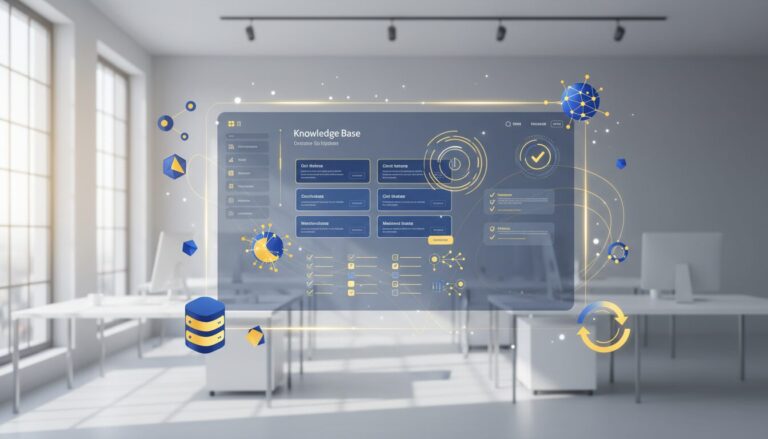
3. Build Your Knowledge Base – This is the foundation of your AI science tutor. Upload or input the educational content that will inform your tutor’s responses. This might include textbook chapters, your own teaching materials, curriculum standards, explanatory notes, common student questions with answers, and practice problems with step-by-step solutions. The more comprehensive and well-organized your knowledge base, the more effectively your AI tutor can assist students. Focus on accuracy and clarity in your source materials, as they directly impact the quality of tutoring your AI provides.
4. Design the Conversation Flow – Using the visual interface, create the pathways students will take when interacting with your tutor. This includes greeting messages, how the tutor responds to different types of questions, how it handles off-topic queries, and how it guides students through problem-solving processes. Good conversation design feels natural and guides students toward understanding without simply providing direct answers. Consider building in prompts that encourage critical thinking, such as asking students what they already know about a topic before providing explanations.
5. Configure the AI’s Personality and Tone – Your AI tutor should have a consistent voice that matches your educational philosophy and resonates with your target audience. Decide whether your tutor will be formal or casual, enthusiastic or calm, and how it will balance being helpful with encouraging independent thinking. Most no-code platforms allow you to set these parameters through simple settings or example conversations that the AI learns from. A friendly, encouraging tone typically works well for younger students, while older students may prefer a more straightforward, professional approach.
6. Add Interactive Elements – Enhance your tutor with features beyond simple question-and-answer exchanges. Consider incorporating practice quizzes that test comprehension, visual aids like diagrams or formulas that appear during explanations, hints systems that provide progressive levels of help, and progress tracking that shows students what they’ve learned. These interactive elements increase engagement and provide more varied learning experiences.
7. Implement Safety and Quality Controls – Especially when working with students, it’s crucial to ensure your AI tutor provides accurate information and maintains appropriate boundaries. Set up filters to prevent the AI from discussing inappropriate topics, verification systems to flag potentially incorrect answers for review, and feedback mechanisms that allow students or parents to report issues. Most no-code platforms include built-in safeguards that you can customize to your specific needs.
8. Test Thoroughly – Before releasing your AI science tutor to students, test it extensively with various types of questions and scenarios. Try questions at different difficulty levels, ask the same question in multiple ways, input common misconceptions to see how the tutor corrects them, and test edge cases where students might get confused. Invite colleagues or a small group of students to beta test and provide feedback on clarity, helpfulness, and user experience.
9. Refine Based on Testing – Use insights from your testing phase to improve your AI tutor. You might need to expand your knowledge base in areas where the tutor struggled, adjust the tone if it felt too formal or too casual, simplify complex explanations that testers found confusing, or add new features that testers requested. This refinement process is ongoing; the best AI tutors evolve continuously based on real-world usage.
Essential Features to Include in Your AI Tutor
While the specific features of your AI science tutor will depend on your goals and audience, certain capabilities significantly enhance the learning experience and should be considered for any educational AI application.
Adaptive Questioning: Your AI tutor should ask clarifying questions to understand what students actually need help with. When a student asks about “cells,” does they mean plant cells, animal cells, cell division, or cellular respiration? A good tutor probes for specificity rather than making assumptions, ensuring students get relevant help.
Step-by-Step Problem Solving: Rather than simply providing answers to science problems, your tutor should guide students through the reasoning process. This might involve breaking complex problems into smaller steps, explaining the scientific principles behind each step, and checking student understanding before moving forward. This approach builds genuine comprehension rather than creating dependency on the AI for answers.
Concept Connections: Effective science tutors help students see relationships between different topics. Your AI should be able to connect new concepts to previously learned material, explain how different scientific disciplines relate to each other, and relate abstract concepts to real-world applications that students can understand and remember.
Multiple Explanation Styles: Students learn in different ways, so your AI tutor should be able to explain concepts using various approaches. This includes verbal explanations, analogies and metaphors, step-by-step logical progressions, and references to visual aids. When a student doesn’t understand the first explanation, the tutor should automatically offer alternative approaches.
Progress Tracking: Help students see their learning journey by implementing features that track topics covered, questions answered correctly versus incorrectly, time spent on different subjects, and areas that need more practice. This data not only motivates students but also provides valuable insights for educators and parents monitoring student progress.
Customizing Your Tutor for Different Science Subjects
Each science discipline has unique characteristics that your AI tutor should accommodate. Customizing your approach for different subjects makes your tutor more effective and valuable to students.
Biology Tutors
Biology tutors should excel at explaining living systems at multiple scales, from molecular processes to ecosystem dynamics. Include robust support for terminology, as biology involves learning numerous specialized terms. Incorporate visual references to anatomical structures, cellular components, and organism classifications. Your biology tutor should also connect concepts to human health and environmental issues, making the subject matter more relevant and engaging for students.
Chemistry Tutors
Chemistry tutors need strong problem-solving capabilities, particularly for stoichiometry, balancing equations, and calculation-based questions. Build in support for chemical notation and formulas, periodic table references, and explanations of bonding and molecular geometry. Your chemistry tutor should help students visualize molecular structures and understand the relationship between microscopic particle behavior and observable chemical properties.
Physics Tutors
Physics tutors should emphasize mathematical application and problem-solving strategies. Include support for unit conversions, formula selection and application, and graphical analysis. Your physics tutor should help students understand the conceptual principles behind equations, not just plug numbers into formulas. Real-world applications and thought experiments make abstract physics concepts more accessible to students.
Earth Science Tutors
Earth science tutors benefit from strong connections to observable phenomena and current events. Include information about weather patterns, geological processes, climate systems, and astronomical concepts. Your earth science tutor should help students understand the interconnected nature of Earth’s systems and the evidence scientists use to understand planetary processes occurring over vast timescales.
Deploying and Sharing Your AI Science Tutor
Once you’ve built and tested your AI science tutor, you need to make it accessible to students. No-code platforms typically offer multiple deployment options that don’t require technical expertise.
The most straightforward approach is sharing a direct link to your AI tutor that students can access through any web browser. This method requires no setup on the student’s end and works across all devices. You can share this link through learning management systems, class websites, email, or messaging platforms. For educators with existing websites, embedding your AI tutor directly into your web pages creates a seamless experience where students can access tutoring without leaving your educational environment.
If you’re working within a school or organization, you might integrate your AI tutor into your learning management system (LMS) like Canvas, Google Classroom, or Moodle. This integration allows students to access the tutor alongside their other course materials and enables you to track usage within your existing educational infrastructure. Some no-code platforms also support mobile app deployment, allowing students to access tutoring through dedicated apps on their phones and tablets.
Consider your students’ most common learning contexts when choosing deployment methods. High school students might prefer accessing the tutor through their phones during homework time, while younger students might primarily use it on school computers. Supporting multiple access methods ensures your AI tutor is available whenever and however students need it.
Best Practices for Effective AI Tutoring
Creating an AI science tutor is just the beginning. Following these best practices ensures your tutor provides genuine educational value and becomes a trusted learning resource for students.
Complement, Don’t Replace: Position your AI tutor as a supplement to classroom instruction and human interaction, not a replacement. Make it clear to students and parents that the AI enhances learning but works best when combined with traditional teaching methods. Encourage students to bring questions from AI tutoring sessions to their human teachers for further discussion.
Encourage Active Learning: Design your tutor to promote thinking rather than passive information consumption. Use Socratic questioning techniques that guide students to discover answers themselves, require students to attempt problems before providing solutions, and offer hints of increasing specificity rather than immediate answers. This approach builds genuine understanding and problem-solving skills.
Update Regularly: Science is a constantly evolving field with new discoveries and refined understandings. Commit to regularly updating your AI tutor’s knowledge base with current information, new teaching approaches that prove effective, and additional content based on student questions that revealed gaps. Regular updates keep your tutor relevant and accurate.
Gather Feedback Systematically: Build mechanisms for collecting student and educator feedback about the tutoring experience. This might include simple ratings after interactions, periodic surveys about usefulness, and direct feedback channels for reporting problems. Use this feedback to continuously improve your tutor’s effectiveness.
Monitor for Accuracy: Periodically review the responses your AI tutor provides to ensure accuracy. Even well-designed AI can occasionally provide confusing or incorrect information. Regular monitoring allows you to identify and correct these issues before they mislead students.
Respect Privacy: If you’re collecting data about student interactions with your AI tutor, be transparent about what information you gather and how you use it. Follow educational privacy regulations like FERPA in the United States, ensure student data is secure, and obtain appropriate permissions from parents for younger students.
Monetizing Your AI Science Tutor
If you’ve invested time and expertise in creating a valuable AI science tutor, you may want to generate revenue from your creation. There are several approaches to monetization that work well for educational AI applications.
The subscription model is popular for comprehensive tutoring services. You might offer a free tier with limited questions per month to let students try the service, then charge a modest monthly fee for unlimited access. This recurring revenue model works well when your AI tutor provides ongoing value throughout a semester or school year. Tiered pricing can accommodate different user needs, with basic plans for occasional help and premium plans with advanced features like detailed progress reports or subject-specific expertise.
For tutors who prefer working with institutions rather than individual students, site licensing offers an attractive option. Schools or tutoring centers pay an annual fee to provide access to your AI tutor for all their students. This approach provides stable revenue and larger-scale impact, though it requires building relationships with educational decision-makers.
Some educators successfully use a freemium model where the core tutoring functionality is free, but premium features require payment. These premium features might include personalized study plans, practice test generators, detailed analytics for parents and teachers, or priority access during high-traffic periods like exam weeks. This model allows you to provide valuable free resources while generating revenue from users who want enhanced capabilities.
Platforms like Estha provide built-in monetization and distribution tools that simplify the process of sharing your AI tutor with communities and generating revenue. These ecosystem features handle payment processing, user management, and distribution, allowing you to focus on creating excellent educational content rather than building business infrastructure from scratch.
Building an AI science tutor has never been more accessible than it is today. What once required teams of programmers and significant financial investment can now be accomplished by individual educators, tutors, and education entrepreneurs using intuitive no-code platforms. The democratization of AI technology means that your teaching expertise and subject knowledge are now the most important ingredients in creating powerful educational tools.
The AI science tutor you build can extend your impact far beyond the traditional constraints of time and physical presence. Students who might struggle in silence during class hours can get immediate help at midnight before an exam. Learners who need concepts explained five different ways can get that patient, repeated instruction without feeling like a burden. And educational innovations that were once exclusive to well-funded schools can now be created and shared by passionate educators anywhere in the world.
As you embark on creating your AI science tutor, remember that this is an iterative process. Your first version won’t be perfect, and that’s completely fine. Launch with the core functionality that addresses your students’ most pressing needs, then refine and expand based on real-world usage and feedback. The beauty of no-code platforms is that you can continuously improve your tutor without starting from scratch.
The future of education is increasingly personalized, accessible, and technology-enhanced. By building your own AI science tutor, you’re not just adopting this future but actively shaping it according to your educational values and expertise. You’re creating tools that reflect how you believe students learn best, that embody your teaching philosophy, and that make quality science education available to more students than you could ever reach through traditional methods alone.
Ready to Build Your AI Science Tutor?
Join educators around the world who are using Estha’s no-code platform to create custom AI tutoring applications in just minutes. No programming knowledge required – just your teaching expertise and passion for helping students learn.