Table Of Contents
- What Are Historical Persona Bots?
- Why Use Historical Persona Bots in Education?
- Planning Your Historical Persona Bot
- Building Your Historical Persona Bot
- Designing Effective Conversations and Interactions
- Implementing Historical Persona Bots in Your Classroom
- Best Practices and Common Pitfalls to Avoid
Imagine your students having a live conversation with Abraham Lincoln about the complexities of the Civil War, or debating scientific methods with Marie Curie herself. Historical persona bots are transforming this imaginative scenario into educational reality, creating unprecedented opportunities for student engagement and deeper historical understanding.
These AI-powered conversational agents embody historical figures, allowing students to interact directly with the personalities who shaped our world. Unlike passive textbook learning or one-dimensional video content, historical persona bots create dynamic, personalized exchanges that adapt to each student’s curiosity and learning pace. The educational impact is remarkable: students ask more questions, retain information longer, and develop genuine connections with historical content.
The best part? Creating these powerful educational tools no longer requires programming expertise or substantial technical resources. Modern no-code AI platforms have democratized the development process, enabling educators to build sophisticated historical persona bots in minutes rather than months. This guide will walk you through everything you need to know, from conceptualizing your historical character to deploying an interactive bot that brings history to life in your classroom.
Create Historical Persona Bots in Minutes
Transform education with AI-powered historical conversations—no coding required
Why Historical Persona Bots?
Your 7-Step Creation Process
Key Success Factors
Essential Research Checklist
Ready to Transform Your Classroom?
Create your first historical persona bot in 5-10 minutes with no coding required
What Are Historical Persona Bots?
Historical persona bots are AI-powered conversational agents designed to simulate interactions with specific figures from history. These digital personas draw from historical records, writings, speeches, and documented perspectives to create authentic, character-driven responses that reflect how the historical figure might have actually communicated. When a student asks a question, the bot responds in the voice, style, and viewpoint of that historical personality.
Unlike simple chatbots that provide generic information, historical persona bots maintain character consistency throughout the conversation. A bot representing Benjamin Franklin doesn’t just recite facts about electricity; it discusses scientific discoveries with Franklin’s characteristic wit, practical wisdom, and Enlightenment-era perspective. This immersive approach transforms information delivery into experiential learning, where students don’t just learn about history but engage with it directly.
These educational tools can be deployed across multiple platforms including classroom websites, learning management systems, mobile apps, and even museum exhibits. Students can access them during class discussions, for homework assignments, or as part of independent research projects. The conversational interface feels natural and accessible, particularly for digital-native students who are comfortable with chat-based communication.
Key characteristics of effective historical persona bots include:
- Historical accuracy: Responses grounded in documented facts, perspectives, and contextual understanding
- Character consistency: Maintaining the historical figure’s communication style, values, and worldview
- Educational alignment: Designed to support specific learning objectives and curriculum standards
- Adaptive interaction: Ability to respond to diverse student questions while staying in character
- Age-appropriate communication: Language and complexity tailored to the student audience
Why Use Historical Persona Bots in Education?
The educational advantages of historical persona bots extend far beyond novelty. Research in educational psychology demonstrates that personalization, narrative engagement, and active participation significantly enhance learning outcomes. Historical persona bots deliver all three simultaneously, creating a uniquely powerful pedagogical tool.
First, these bots address one of education’s most persistent challenges: student disengagement with historical content. When history feels distant and disconnected from students’ lives, motivation plummets. Conversational interactions with historical figures bridge this gap, making the past feel immediate and relevant. Students who might skim a textbook chapter will spend thirty minutes asking questions to a Harriet Tubman bot, driven by genuine curiosity rather than assignment compliance.
Second, historical persona bots support differentiated instruction naturally. Advanced students can explore complex philosophical questions with a Socrates bot, while struggling learners can ask basic clarifying questions without peer judgment. The bot adapts its responses to each interaction, providing scaffolding where needed and depth where appropriate. This individualized approach is difficult to achieve in traditional classroom settings with one teacher managing thirty students.
Third, these tools develop critical thinking and source evaluation skills. Students learn to consider perspective and bias when they encounter a Christopher Columbus bot that reflects 15th-century European worldviews. Educators can follow bot interactions with discussions about historical interpretation, the importance of multiple perspectives, and how primary sources shape our understanding of the past. This metacognitive dimension adds significant educational value.
Specific educational benefits include:
- Increased student engagement and time-on-task with historical content
- Development of historical empathy and perspective-taking abilities
- Opportunities for student-directed inquiry and personalized learning paths
- 24/7 availability for student questions and exploration
- Safe environment for asking questions without fear of judgment
- Enhanced retention through conversational, narrative-based learning
- Support for diverse learning styles and accessibility needs
Planning Your Historical Persona Bot
Successful historical persona bots begin with thoughtful planning long before any technical development occurs. This preparation phase determines whether your bot will become a transformative educational tool or a disappointing gimmick. Invest time in making strategic decisions about your historical figure, learning goals, and authenticity standards.
Choosing the Right Historical Figure
Not all historical figures translate equally well to bot format. The ideal candidate possesses sufficient documented material to establish authentic voice and perspective while aligning with your curriculum objectives. Consider figures who left substantial written records, gave speeches, or whose contemporaries documented their conversations and viewpoints extensively.
Prioritize historical figures whose perspectives will genuinely enhance student understanding rather than simply entertaining them. A bot representing Frederick Douglass offers rich opportunities to explore themes of freedom, human rights, and social justice through powerful first-person testimony. Abot representing a minor historical figure with limited documentation may struggle to provide substantive educational value.
Additionally, consider the complexity and potential sensitivity of the historical figure’s views. Some perspectives require careful pedagogical framing to avoid reinforcing harmful stereotypes or presenting problematic ideologies without proper context. A bot representing a historical figure with racist or sexist views should be designed with explicit educational guardrails and followed by critical discussion.
Selection criteria for historical figures:
- Availability of primary source materials (letters, speeches, writings, documented conversations)
- Relevance to your curriculum standards and learning objectives
- Student interest and cultural relevance to your classroom community
- Appropriate complexity level for your students’ developmental stage
- Potential for meaningful educational conversations beyond basic facts
- Consideration of diverse perspectives and representative history
Defining Clear Learning Objectives
Before building your bot, articulate precisely what you want students to learn from their interactions. Vague goals produce unfocused bots that fail to deliver educational value. Specific, measurable learning objectives shape every aspect of your bot’s design, from conversation topics to response parameters.
Effective learning objectives for historical persona bots typically combine content knowledge with skills development. For example, interactions with a Rosa Parks bot might aim for students to understand the organization and strategy behind the Montgomery Bus Boycott (content) while developing skills in analyzing primary source perspectives and connecting historical events to contemporary social movements (skills).
Document these objectives clearly and share them with students. When learners understand the educational purpose behind the technology, engagement increases and conversations become more focused. Students approach the bot as a learning tool rather than merely a novelty, asking deeper questions aligned with course goals.
Researching for Authenticity
Authenticity separates educational historical persona bots from generic question-answering systems. Students can detect when a bot feels like a Wikipedia article wearing a costume versus a genuinely character-driven experience. Achieving this authenticity requires substantial research into your historical figure’s documented voice, perspectives, and communication patterns.
Start with primary sources. Read the historical figure’s actual writings, speeches, and correspondence. Note recurring phrases, rhetorical devices, vocabulary choices, and communication style. Pay attention to how they structure arguments, what metaphors they use, and how they address different audiences. These linguistic patterns will inform your bot’s conversational design.
Consult reputable secondary sources to understand historical context, biographical details, and scholarly interpretations of the figure’s perspectives. This contextual knowledge helps you anticipate student questions and prepare appropriate in-character responses. Understanding the historical figure’s relationships, influences, and the events they experienced allows your bot to reference these elements naturally during conversations.
Research checklist for authenticity:
- Primary source documents (letters, speeches, published works, interviews)
- Biographical information and timeline of significant life events
- Historical context of the time period and relevant events
- Communication style, vocabulary, and rhetorical patterns
- Documented perspectives on key issues and topics
- Relationships with other historical figures and movements
- Common misconceptions or myths about the historical figure
Building Your Historical Persona Bot
With your planning complete, you’re ready to construct the actual bot. The technical approach you choose significantly impacts development time, required expertise, customization options, and ongoing maintenance. Understanding both traditional and modern approaches helps you select the method that best fits your skills, resources, and educational goals.
Traditional Development Approach
The conventional method of creating conversational AI involves programming, natural language processing configuration, and technical infrastructure management. Development teams write code to define conversation flows, integrate AI language models, establish character parameters, and deploy the bot on servers. This approach offers maximum customization but requires significant technical expertise and resources.
Educators pursuing this route typically need partnerships with developers or technical departments. The process involves multiple specialists: programmers to build the interface, AI engineers to configure the language model, instructional designers to structure educational content, and subject matter experts to ensure historical accuracy. Development timelines often extend from weeks to months, with ongoing maintenance requiring continued technical support.
While this approach suits large institutions with dedicated technical resources, it creates barriers for individual educators or small schools seeking to implement historical persona bots. The time investment, technical complexity, and cost often prove prohibitive despite the educational value these tools provide.
The No-Code Approach with AI Platforms
Modern no-code AI platforms have revolutionized bot development, making sophisticated conversational agents accessible to educators without programming backgrounds. These platforms provide visual interfaces where you configure your bot’s personality, knowledge base, and behavior through intuitive controls rather than coding. What once required a development team can now be accomplished by a single educator in minutes.
Estha exemplifies this democratization of AI technology, offering an intuitive drag-drop-link interface specifically designed for professionals without technical backgrounds. The platform enables educators to create fully functional historical persona bots in just 5-10 minutes, eliminating the traditional barriers of coding knowledge and complex prompting requirements.
Step-by-step process for creating a historical persona bot with no-code platforms:
1. Define Your Bot’s Core Identity – Begin by establishing the fundamental character parameters. Specify the historical figure’s name, time period, and essential biographical information. This creates the foundation for all subsequent interactions and ensures consistent character representation.
2. Craft the Personality and Voice – Input examples of your historical figure’s actual language, typical phrases, and communication style discovered during your research phase. Configure the tone settings to match their documented personality (formal or conversational, serious or humorous, philosophical or practical). This step transforms generic AI responses into authentic character-driven conversations.
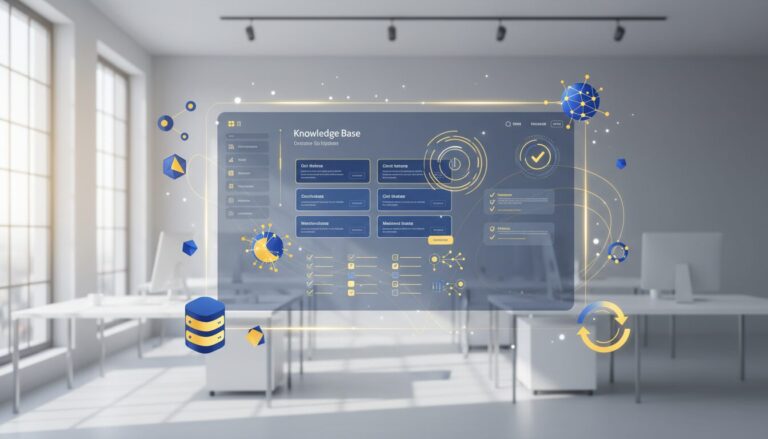
3. Build the Knowledge Base – Upload or input the information your bot should draw upon when answering questions. Include biographical details, historical context, the figure’s documented views on various topics, and relevant historical events. Organize this content by themes or topics to improve response accuracy and relevance.
4. Establish Conversation Guardrails – Define boundaries for appropriate topics and how the bot should handle questions outside its expertise or time period. Configure how the bot responds to anachronistic questions (asking a historical figure about events after their lifetime) and potentially sensitive topics. These parameters maintain educational integrity and historical authenticity.
5. Configure Educational Elements – Set up specific learning pathways, discussion prompts, or guided conversation flows aligned with your learning objectives. Some platforms allow you to create structured activities where the bot guides students through particular historical scenarios or thought exercises while maintaining conversational flexibility.
6. Test and Refine – Conduct extensive testing by asking diverse questions from different student perspectives. Evaluate whether responses maintain character consistency, historical accuracy, and educational value. Refine the personality settings, knowledge base, or guardrails based on these test interactions to improve bot performance.
7. Deploy and Integrate – Once satisfied with your bot’s performance, deploy it through your chosen platform. Most no-code solutions offer multiple deployment options including embeddable widgets for classroom websites, direct links for learning management systems, or standalone web applications. Configure access permissions appropriate for your educational setting.
The no-code approach dramatically reduces the technical burden while maintaining educational quality. Educators retain complete control over pedagogical decisions and content accuracy while the platform handles the complex AI infrastructure behind the scenes. This efficiency allows you to create multiple historical persona bots covering different curriculum units without prohibitive time investment.
Designing Effective Conversations and Interactions
Technical functionality alone doesn’t guarantee educational effectiveness. The quality of interactions depends heavily on thoughtful conversation design that balances historical authenticity with pedagogical purpose. Well-designed conversation patterns guide students toward deeper engagement while preserving the open-ended exploration that makes these tools valuable.
Start by anticipating common student questions and preparing your bot to address them thoroughly and in character. Students will likely ask about major life events, significant accomplishments, perspectives on contemporary issues, and personal details. Ensure your bot’s knowledge base and personality configuration enable substantive responses to these predictable inquiries rather than generic or evasive answers.
Design conversation pathways that encourage critical thinking rather than passive information consumption. Configure your bot to occasionally pose counter-questions, challenge assumptions, or invite students to consider alternative perspectives. For example, an Albert Einstein bot might respond to questions about scientific discovery by asking students to explain their own hypotheses first, modeling the scientific method through conversation structure.
Incorporate authentic historical uncertainty and limitations. Historical figures didn’t possess omniscient knowledge of their own time, let alone future events. Your bot should acknowledge areas of uncertainty, reflect the incomplete information available during that era, and demonstrate historically appropriate gaps in knowledge. This authenticity actually enhances educational value by illustrating the constructed nature of historical knowledge.
Conversation design best practices:
- Vary response length based on question complexity (brief answers for simple queries, detailed explanations for complex topics)
- Include personal anecdotes and specific details that bring historical context to life
- Reference other historical figures and events to build interconnected understanding
- Use appropriate historical vocabulary with contextual explanations when needed
- Acknowledge multiple perspectives on controversial historical issues
- Guide students toward credible sources for further research
- Maintain character even when politely declining to answer inappropriate questions
Implementing Historical Persona Bots in Your Classroom
Successful implementation requires more than technical deployment. Students need proper introduction to the tool, clear expectations for engagement, and structured activities that leverage the bot’s capabilities effectively. Strategic integration into your existing curriculum maximizes educational impact while avoiding the “technology for technology’s sake” trap.
Introduce the bot with explicit framing about its educational purpose and limitations. Explain that while the bot simulates historical perspectives based on research, it represents an interpretation rather than the actual historical figure. Discuss the concept of historical simulation and how AI technology enables these interactive experiences. This transparency builds critical awareness while maintaining engagement.
Design specific activities that integrate bot interactions with other learning modalities. Rather than treating the bot as a standalone tool, combine conversations with primary source analysis, traditional readings, and classroom discussions. For example, students might interact with a bot representing a Civil War soldier, then compare those simulated perspectives with actual letters from soldiers, examining similarities, differences, and what these comparisons reveal about historical interpretation.
Create accountability structures that encourage meaningful engagement. Require students to document their conversations, reflect on what they learned, or prepare questions in advance. Consider having students submit their most interesting exchange with analysis of what it revealed about the historical period. These structured expectations prevent superficial interactions and promote thoughtful exploration.
Implementation strategies for different educational contexts:
- Introduction to new units: Students interview historical figures at the beginning of a topic to activate prior knowledge and generate questions for further study
- Perspective-taking exercises: Multiple bots representing different historical viewpoints on the same event help students understand complex historical debates
- Research support: Students consult relevant historical figures during project development for contextual understanding and primary perspective insights
- Assessment alternatives: Students demonstrate understanding by generating questions that explore nuanced aspects of historical figures’ perspectives
- Homework and flipped classroom: Initial exploration with bots occurs at home, with class time devoted to discussing insights and questions that emerged
Best Practices and Common Pitfalls to Avoid
Learning from common implementation challenges helps educators maximize the educational value of historical persona bots while avoiding frustration and wasted effort. These practices have emerged from classroom experiences and educational technology research across diverse educational settings.
Emphasize historical thinking over fact collection. The greatest value of historical persona bots lies not in delivering information (which textbooks accomplish efficiently) but in developing historical empathy, perspective-taking, and understanding of how historical context shapes worldviews. Design activities and conversations that leverage these unique capabilities rather than using expensive AI technology for simple fact retrieval.
Maintain appropriate historical complexity. Resist the temptation to oversimplify historical perspectives to make them universally agreeable. Historical figures held views shaped by their time period, some of which modern audiences find problematic. Present these complexities honestly while providing appropriate educational framing. A bot representing Thomas Jefferson should acknowledge the contradiction between championing liberty while enslaving people, not sanitize this tension.
Provide multiple perspectives on significant events. Single-perspective history distorts understanding. When covering complex historical events or periods, create multiple persona bots representing different viewpoints, social positions, or sides of conflicts. Students comparing conversations with both a factory owner and a labor organizer during the Industrial Revolution develop more nuanced understanding than interaction with either perspective alone.
Integrate rather than isolate. Technology works best when integrated seamlessly into comprehensive instructional approaches. Historical persona bots should complement traditional sources, discussions, and activities rather than replacing them. Use bot interactions to generate questions for class discussion, identify gaps for further research, or provide context for primary source analysis.
Common pitfalls to avoid:
- Insufficient testing before student deployment leading to inaccurate or inappropriate responses
- Failing to establish clear educational objectives beyond “using cool technology”
- Neglecting to address AI limitations and potential biases with students
- Creating bots without adequate historical research, resulting in generic, inauthentic interactions
- Overloading bots with too much information, making responses unfocused or overwhelming
- Assuming technology alone creates engagement without thoughtful activity design
- Ignoring accessibility needs and assuming all students can engage equally with conversational interfaces
Regular evaluation and iteration improve bot effectiveness over time. Collect student feedback about their experiences, review conversation logs to identify areas where the bot struggles, and refine your configuration based on these insights. Historical persona bots should evolve throughout the school year as you discover what works best for your specific students and curriculum.
Historical persona bots represent a powerful convergence of educational pedagogy and accessible AI technology, transforming how students engage with historical content and develop critical thinking skills. By creating conversational experiences with historical figures, educators open new pathways for student curiosity, personalized learning, and deeper historical understanding that traditional methods struggle to achieve.
The democratization of AI development through no-code platforms has placed this transformative capability directly in educators’ hands. You no longer need technical departments, substantial budgets, or programming expertise to create sophisticated educational tools. With thoughtful planning, solid historical research, and intuitive platforms, you can build engaging historical persona bots that bring your curriculum to life in minutes.
The key to success lies not in the technology itself but in the pedagogical intentionality you bring to the process. Clear learning objectives, authentic historical research, thoughtful conversation design, and strategic classroom integration determine whether your bot becomes a transformative educational tool or a fleeting novelty. Invest time in the planning and design phases, and the technology will amplify your educational vision effectively.
As you embark on creating your first historical persona bot, remember that iteration and refinement are natural parts of the process. Your initial version doesn’t need to be perfect. Deploy, observe student interactions, gather feedback, and continuously improve. Each refinement enhances the educational experience, and the time investment pays dividends through increased student engagement and deeper learning outcomes.
Ready to Bring History to Life in Your Classroom?
Create your first historical persona bot in just 5-10 minutes with Estha’s intuitive no-code platform. No programming knowledge required.